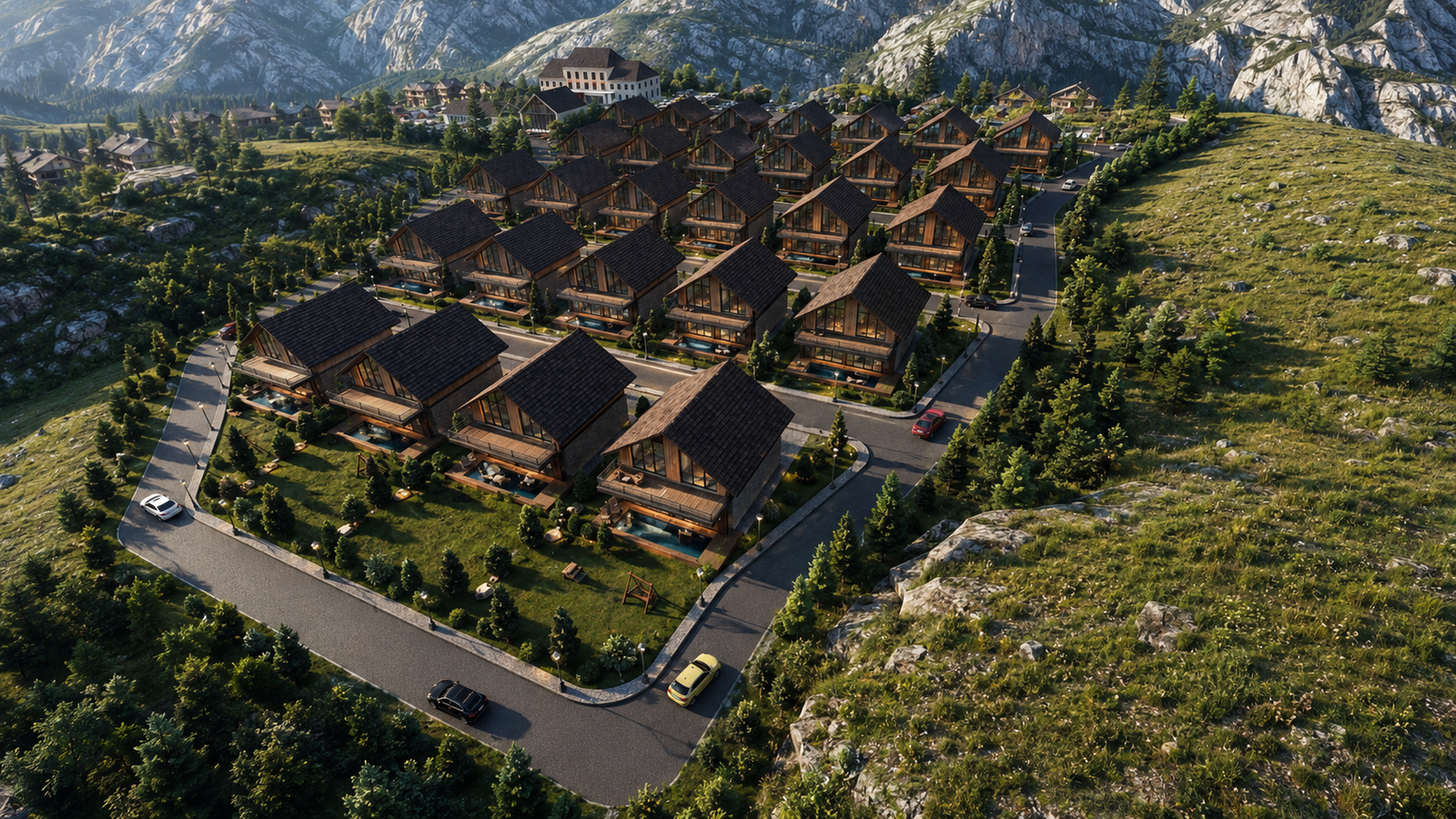
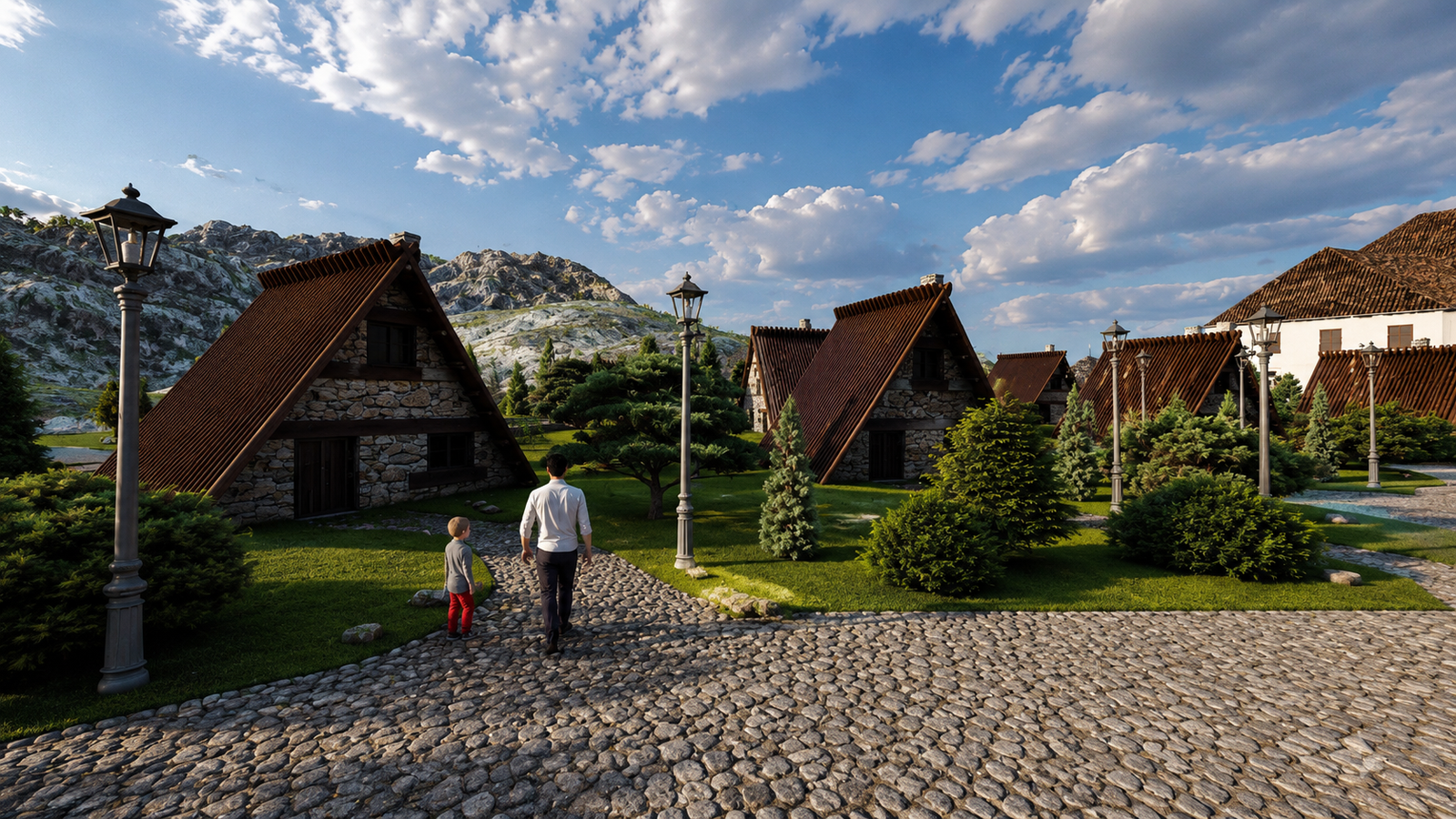
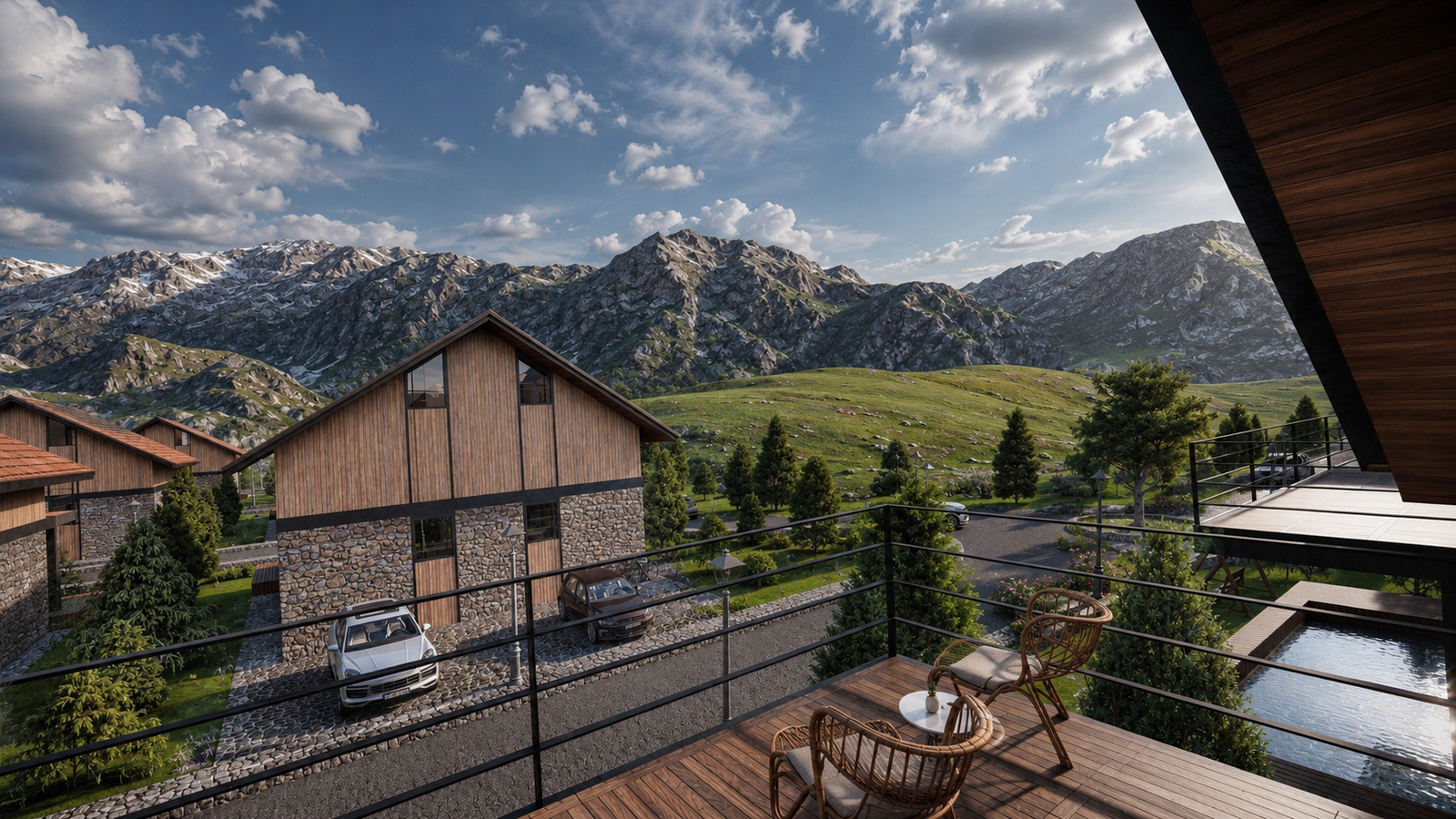
The ethno-village concept is based on the idea of recreating the atmosphere and social structure of historic Balkan settlements rather than simply reproducing individual traditional buildings. Architecture is organized as a collection of intimate streets, landscaped paths, gathering spaces, gardens, and small-scale buildings. Natural stone, timber, pitched roofs, traditional proportions, and handcrafted architectural elements establish a vernacular character, while contemporary interiors and amenities provide the comfort expected from a modern destination resort.
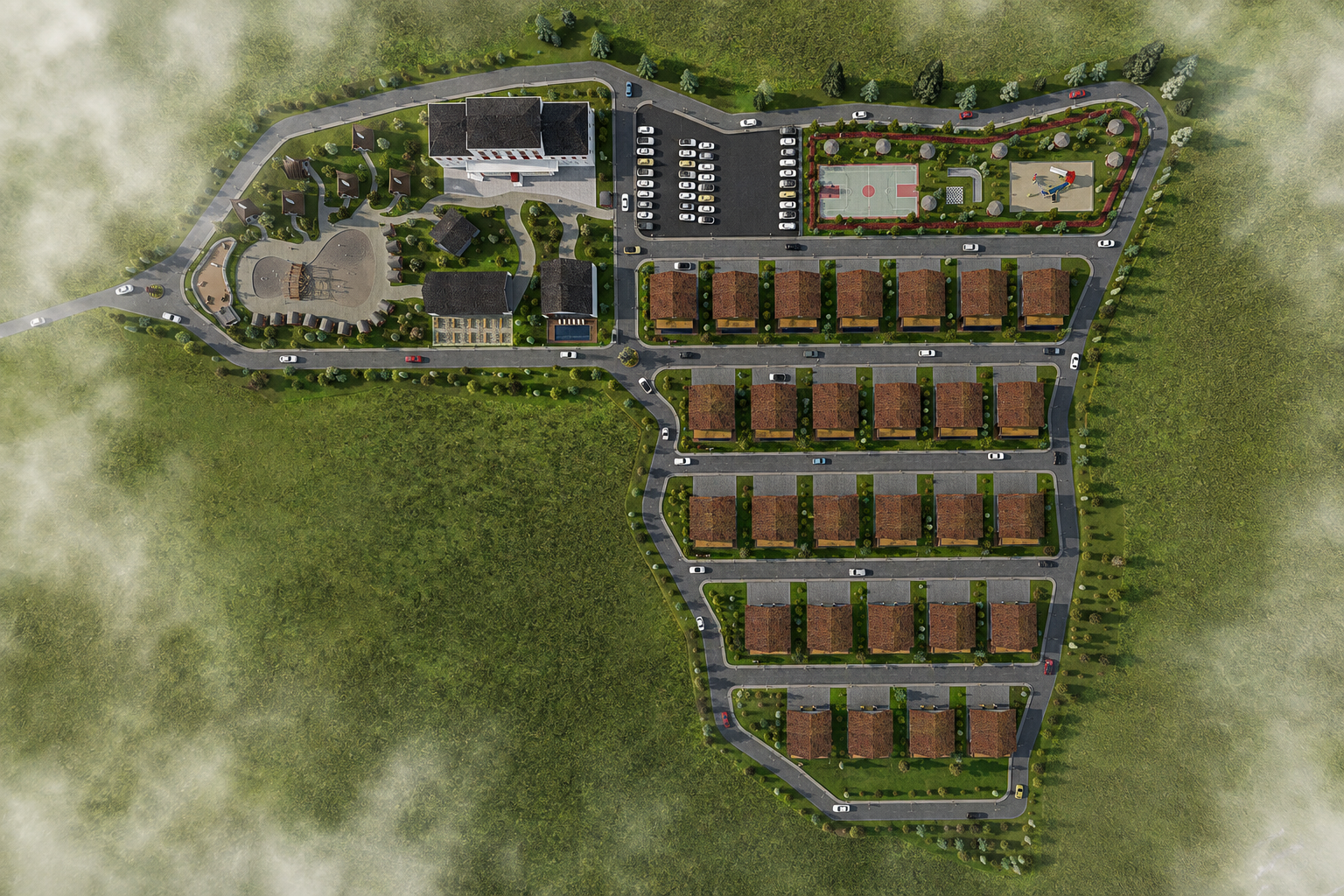
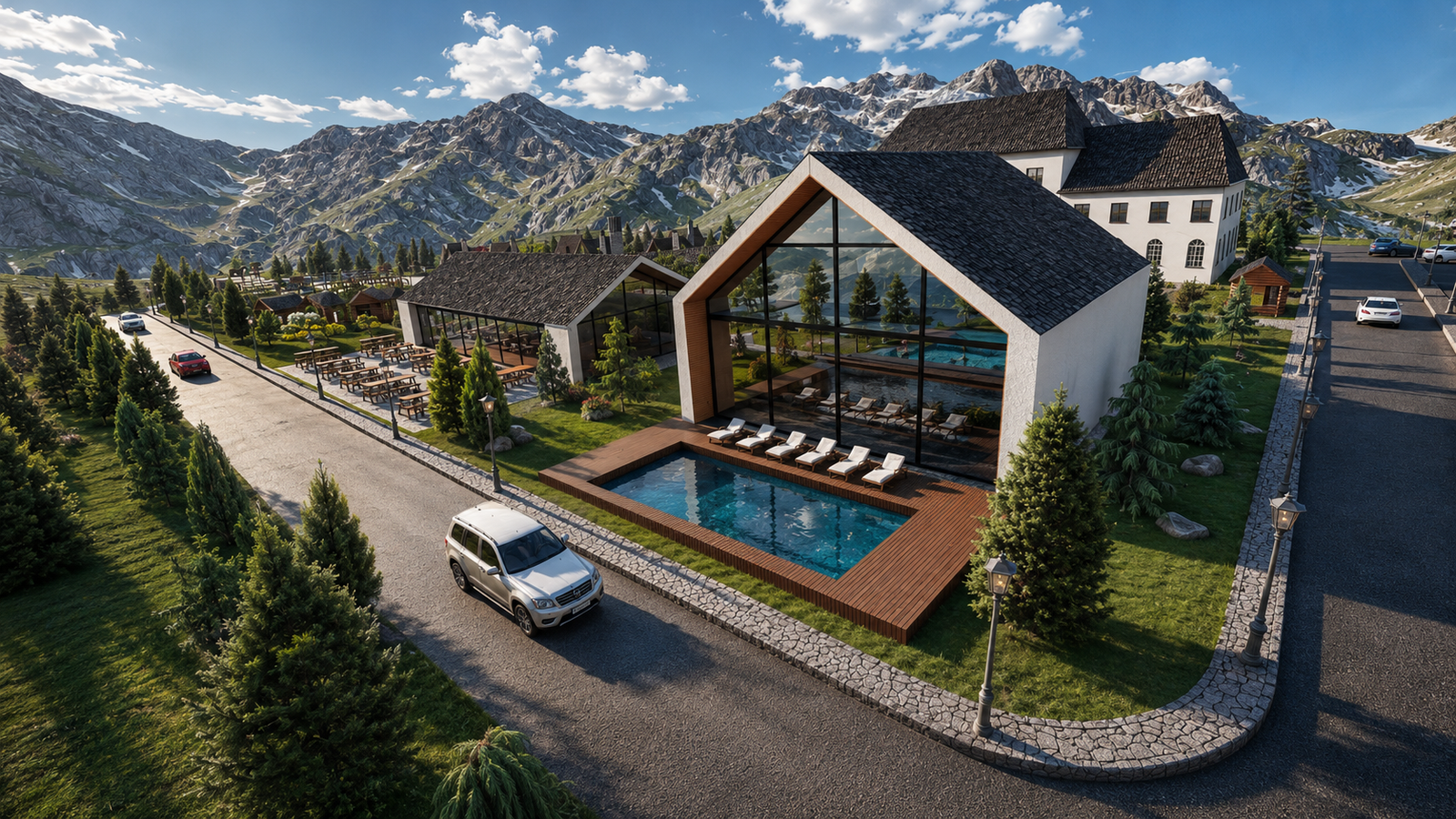
The development combines private mountain houses with shared hospitality and recreational facilities. A central hotel and wellness zone incorporates the main reception, restaurant, SPA, swimming and relaxation facilities, while private houses are positioned throughout the landscape to maximize privacy and mountain views. Parks, children's areas, sports facilities, walking routes, water features, and a dedicated prayer area create a complete environment for both short-term guests and longer residential stays.
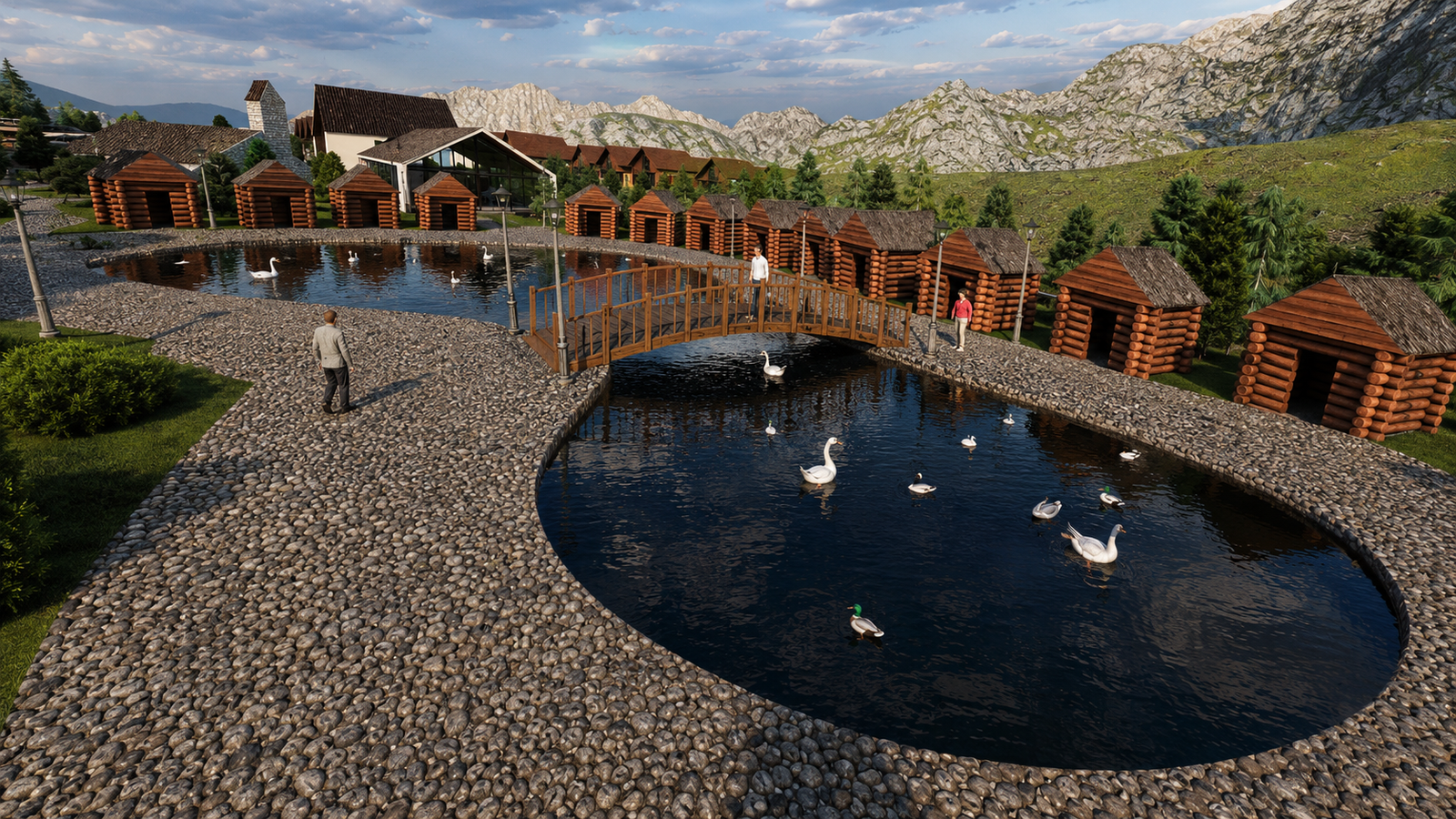
A more traditional layer of the village is formed through small timber trading huts, stone cottages, local food and craft spaces, pedestrian squares, bridges, and landscaped communal areas. These elements reinterpret the historic marketplace and everyday village life of the Balkans, allowing retail, dining, recreation, culture, and hospitality to become part of the guest experience. The result is a destination where regional heritage and contemporary resort living are integrated into one cohesive mountain community.